Application of Low-Fidelity Methods to eVTOL Propeller Icing and Performance Degradation
Sep 10, 2025· ·
0 min read
·
0 min read
Aishwerya Gahlot, PhD
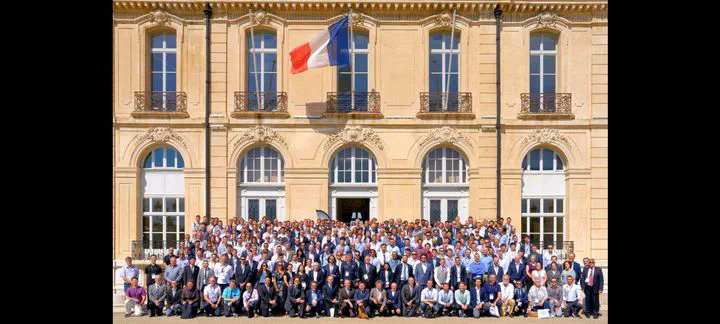 European Rotorcraft Forum 2025
Abstract
The performance of electric vertical takeoff and landing (eVTOL) vehicles can be significantly degraded by ice accretion on propeller blades during flight through supercooled clouds. While high-fidelity icing tools are available, their computational cost limits rapid design-space exploration. This study presents a low-fidelity, modular framework that couples blade element momentum theory (BEMT) with two-dimensional icing models to predict both ice accretion and performance degradation. Experimental data from NASA Glenn’s Icing Research Tunnel for 28-inch and 36-inch diameter carbon fiber propellers serve as validation for the methodology. Ice shapes for both rime and glaze conditions are simulated using single- and multi-step approaches with LEWICE and GTICE2D. Comparisons with tunnel data demonstrate that the approach captures reasonably well the trends in impingement limits, ice thickness, and collection efficiency, while preserving computational efficiency. The results highlight the utility of low-fidelity tools for assessing the effects of icing in early-stage design and operational analysis of eVTOL propulsion systems.
Date
Sep 10, 2025 3:30 PM — 4:00 PM
Event
Location
Venice, Italy